
Phone: 9154384000 Hours: Mon-Sat: 8am – 10pm Email: sayurveda9999@gmail.com
WELCOME OUR WEBSITE


Sri Sanjeevini Ayurveda Super Speciality

Natural Care,
Healthy Living

Experience holistic Ayurvedic wellness focused on natural balance, prevention, rejuvenation and harmony of body, mind & soul.

5000+ Years Wisdom Ancient natural health system
Vata • Pitta • Kapha Balance Personalized wellness approach
Body, Mind & Soul Complete holistic healing

Vata

Movement, energy and natural rhythm.

Pitta

Digestion, metabolism and inner balance.

Kapha

Strength, stability and nourishment.

Sri Sanjeevini Ayurveda Super Speciality

Ancient Ayurveda,
Modern Wellness

Ayurveda is a 5000+ years old holistic health system focused on prevention, natural healing, rejuvenation and harmony of body, mind & soul.

Natural Healing

Traditional wellness approach based on harmony with nature.

Prevention First

Focuses on protecting health, not only treating sickness.

Rejuvenation

Supports vitality, balance, detox and long-term wellness.

Holistic Care

Balances body, mind, senses and soul for complete care.

Tridosha Balance

Vata • Pitta • Kapha

Ayurveda understands wellness through three primary energies that influence body and mind.

Vata

Linked with movement, energy, creativity and natural rhythm.

Pitta

Linked with digestion, metabolism, focus and transformation.

Kapha

Linked with strength, stability, nourishment and immunity.

Learn Ayurveda

Simple Guide for Daily Wellness

Explore basic Ayurvedic principles in a clean and easy way. Detailed document content can be added on a separate knowledge page.

Ayurveda means the science of life. It focuses on preventing illness, healing naturally and preserving long-term health.

Tridosha means Vata, Pitta and Kapha. These three energies help explain body nature, lifestyle balance and wellness approach.

Ayurveda focuses on root cause, natural care, detox, rejuvenation, diet, lifestyle, yoga and meditation support.

Want to Know Your Body Balance?

Consult for Ayurvedic guidance, lifestyle support and natural wellness care.

Patient Experiences

What Our Patients Say

Real experiences from people who trusted natural Ayurvedic care, lifestyle guidance and holistic healing support.

R

Ramesh Patel

Wellness Consultation

“The doctor explained everything very clearly and suggested simple Ayurvedic lifestyle changes. I felt more confident about my health routine.”

S

Sunita Sharma

Natural Health Care

“Very peaceful consultation experience. The guidance was practical, natural and easy to follow in daily life.”

A

Ajay Mehta

Ayurvedic Lifestyle Support

“I liked the holistic approach. Instead of only focusing on symptoms, they guided me about diet, routine and overall wellness.”

P

Priya Nair

Body & Mind Balance

“The clinic has a very calm and caring feel. The advice was simple, natural and focused on long-term health.”

Ayurveda Articles

Ayurveda Knowledge

Explore Ayurvedic articles, lifestyle guidance and natural wellness knowledge in a clean professional format.

Understanding Tridosha: Vata, Pitta and Kapha
Image

Understanding Tridosha: Vata, Pitta and Kapha

🌿 Ayurveda explains that every person has a unique body constitution, known as Prakriti. This constitution is formed by the natural balance of three primary energies called Doshas. These three Doshas are Vata, Pitta and Kapha.

🌀 These Doshas are created from the five basic elements of nature. Vata is mainly connected with Air and Space. Pitta is mainly connected with Fire and Water. Kapha is mainly connected with Water and Earth. Together, these three energies control the physical, mental and emotional functions of the body.

🌱 Vata is responsible for movement, energy, breathing, circulation, communication and nervous system activity. People with Vata dominance may be creative, active, enthusiastic and quick in speech or movement. When Vata becomes imbalanced, it may lead to dryness, weakness, irregular routine, constipation, worry, fear, anxiety, lack of focus and disturbed sleep.

🔥 Pitta is responsible for digestion, metabolism, body heat, intelligence, focus and transformation. People with Pitta dominance may be sharp, courageous, competitive, focused and good decision makers. When Pitta becomes imbalanced, it may lead to heat, acidity, anger, skin rashes, infections, irritation, inflammation and digestive problems.

💧 Kapha is responsible for strength, stability, nourishment, immunity and body structure. People with Kapha dominance may be calm, stable, caring, patient and strong. When Kapha becomes imbalanced, it may lead to heaviness, laziness, weight gain, low metabolism, congestion, sinus problems and lack of motivation.

🧬 Ayurveda also explains the importance of Sapta Dhatu, the seven basic tissues of the body. These include Rasa, Rakta, Mamsa, Meda, Asthi, Majja and Shukra. Each tissue supports the next one, and imbalance in one tissue may affect the entire body system.

🌼 According to Ayurveda, disease occurs when a person lives out of harmony with their natural constitution. Every individual has a different combination of Vata, Pitta and Kapha, so the path to good health is also different for each person.

🧘 The aim of Ayurvedic consultation is to understand the patient’s body nature, lifestyle, habits, diet, emotional state and imbalance. Based on this understanding, Ayurveda suggests proper food, herbs, daily routine, detoxification, yoga, meditation and lifestyle changes.

🌿 When Vata, Pitta and Kapha remain balanced, the body feels energetic, the mind feels peaceful and digestion, immunity and overall health work in a better way. Tridosha balance is one of the most important foundations of Ayurvedic wellness.
09 Jun 2026
Ayurvedic Food and Lifestyle Balance
Image

Ayurvedic Food and Lifestyle Balance

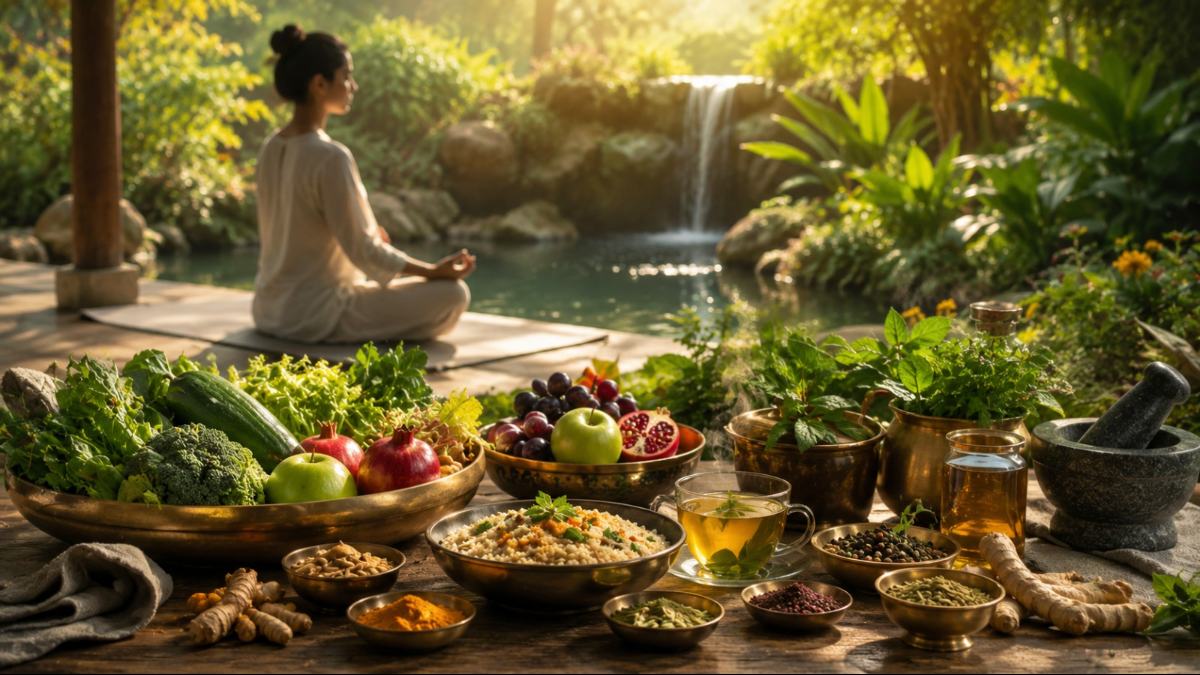
🌿 Ayurveda gives great importance to food, daily routine and lifestyle according to each person’s body constitution. A balanced life in Ayurveda is not only about eating healthy food, but also about following the right habits, maintaining proper digestion, keeping the mind calm and living in harmony with one’s natural body type.

🌀 According to Ayurveda, Vata, Pitta and Kapha each have their own qualities, and when these qualities become excessive, imbalance may appear in the body and mind. Therefore, Ayurveda recommends specific foods and lifestyle practices to pacify each dosha and restore natural balance.

🌱 Vata Dosha Balance
Vata is connected with air and space, and its qualities are dry, light, cold and mobile. To balance Vata, warm, moist, soft and nourishing foods are recommended. Foods such as rice, wheat, oats, cooked vegetables, soups, ghee, milk and naturally sweet fruits are considered beneficial. Vata people are also advised to follow a regular routine, eat meals on time, sleep properly, stay warm and practice gentle exercise such as walking and meditation. Too much dry, cold, raw or light food may aggravate Vata and lead to worry, weakness, irregular digestion and sleep disturbance.

🔥 Pitta Dosha Balance
Pitta is related to fire and water, and its qualities are hot, sharp and intense. To balance Pitta, cooling, mild and soothing foods are recommended. Foods such as milk, rice, beans, steamed vegetables, sweet fruits and mild spices like coriander, cumin and cardamom are helpful. Pitta people benefit from calmness, emotional balance, timely meals, staying cool, avoiding excessive heat and practicing relaxation. Spicy, oily, sour and fried foods may aggravate Pitta and can increase acidity, irritation, anger, skin issues and digestive discomfort.

💧 Kapha Dosha Balance
Kapha is related to water and earth, and its qualities are heavy, cold, soft and stable. To balance Kapha, light, warm, dry and stimulating foods are recommended. Foods such as leafy vegetables, light grains, dried fruits, ginger, turmeric and warm herbal preparations are helpful. Kapha people are encouraged to stay active, exercise daily, avoid laziness, keep the body moving and maintain a light routine. Heavy, oily, cold, sweet and overly rich foods may aggravate Kapha and lead to weight gain, congestion, slow digestion and low energy.

🍎 Ayurveda also teaches that food should not only be chosen for taste, but also for its effect on the body and mind. Proper digestion is very important because poor digestion can lead to the accumulation of toxins, known as Ama. To prevent this, Ayurveda recommends eating fresh food, maintaining regular meal times and avoiding overeating.

🧘 Lifestyle is equally important in Ayurvedic healing. Daily routine, good sleep, massage, exercise, meditation, proper elimination and protection from extreme weather all support dosha balance. For example, Vata benefits from routine and warmth, Pitta benefits from coolness and calmness, and Kapha benefits from movement and stimulation.

🌼 Ayurveda reminds us that each person is unique, so the path to wellness is also unique. By understanding body type, choosing the right foods and following a supportive lifestyle, Ayurveda helps maintain health, improve digestion, strengthen immunity and promote long-term wellbeing.

🌿 In this way, Ayurvedic food and lifestyle balance becomes a practical and natural path toward prevention, rejuvenation and complete wellness.

09 Jun 2026
Introduction to Ayurveda
Image

Introduction to Ayurveda

🌿 Ayurveda is one of the oldest surviving complete medical systems in the world, practiced in India for more than 5000 years. It is a holistic health system based on harmony between human life and nature.

📖 The origin of Ayurveda is connected with ancient Indian wisdom, and Ayurvedic references are found in the Vedas, the oldest written records of human civilisation. Over time, the art of Ayurveda spread from India to different regions such as Tibet, China, Mongolia, Korea and Sri Lanka, carried by Buddhist monks and traditional healers.

🌱 Ayurveda is not only a treatment system for sickness. It is a complete way of life that focuses on preventing disease, improving health, increasing vitality, supporting longevity and maintaining natural balance. The main goal of Ayurveda is to achieve harmony between body, mind, senses and soul.

🧘 According to Ayurveda, true health means complete balance. It does not focus only on the physical body, but also gives importance to the mind, senses and inner wellbeing. Any imbalance at these levels may affect health, so Ayurveda works on the root cause of the disease instead of only treating symptoms.

✨ In Indian tradition, four important goals of human life are described: Dharma, Artha, Kama and Moksha. Ayurveda explains health as a state where a person is able to live life in balance and successfully move toward these goals.

🌿 Ayurveda is divided into eight important branches:

  1. Kayachikitsa – Internal Medicine
  2. Shalya Tantra – Surgery
  3. Shalakya Tantra – Ear, Nose, Throat and Ophthalmology
  4. Agada Tantra – Toxicology
  5. Bhuta Vidya – Psychiatry
  6. Kaumar Bhritya – Paediatrics
  7. Rasayana – Science of Rejuvenation
  8. Vajikarana – Science of Vitality and Reproductive Health

🌼 Ayurvedic treatment is mainly of two types:

  1. Shamana Chikitsa – Suppressive or palliative therapies
  2. Shodhana Chikitsa – Purificatory therapies, including Panchakarma

🌺 Ayurveda is made from two words: “Ayu” meaning life and “Veda” meaning knowledge or science. So, Ayurveda means “Science of Life.” Its aim is to protect health, prevent illness, heal the sick and preserve life.

🍃 The main principles of Ayurveda include:

• Pancha Maha Bhuta – Five Elements
• Tri Dosha – Three biological energies
• Sapta Dhatu – Seven body tissues
• Tri Mala – Three types of waste products
• Srotas – Body channels
• Agni – Digestive and metabolic fire

🌎 Ayurveda explains that everything in the universe, including the human body, is made from five basic elements:

  1. Prithvi – Earth
  2. Jala – Water
  3. Agni – Fire
  4. Vayu – Air
  5. Akash – Space

🌿 These five elements are present in the human body in different forms. Space is present in hollow areas like the mouth, ears, throat and stomach. Air provides movement in the body. Fire supports digestion and metabolism. Water is present in body fluids like blood, plasma, lymph and saliva. Earth represents solid parts of the body such as muscles, fat, skin and nails.

🌱 Ayurveda teaches that when these elements, energies and body systems remain in balance, a person experiences better health, strength, peace and overall wellness.

09 Jun 2026